
Who We Ares
About HARI
The Hindu American Religious Institute (HARI) is a spiritual and cultural home for the Hindu community of Central Pennsylvania. Since our founding, HARI has grown from small gatherings in community halls into a full temple complex that welcomes devotees of every background Hindu and Jain alike — to worship, celebrate, and learn together.
Our temple houses sacred murtis of the Hindu tradition alongside Lord Mahaveer of the Jain tradition, and is guided by a Board of Trustees, Executive Committee, and dedicated priests who together keep our traditions, festivals, and community life thriving.
Our Mission
The mission of the Hindu American Religious Institute (HARI) is to serve as a center for Hindu worship, to promote spiritual development and conduct cultural and educational activities for the benefit of the Hindu community.
Our Vision
The vision of the Hindu American Religious Institute (HARI) is to bring together people of Hindu faith coming from various parts of the world so as to promote the Hindu way of life and to preserve and protect the rich Hindu cultural heritage in our present and future generations.
More About Us
Swipe to explore our deities, leadership & governance
Deities
Visit
Priests
Visit
Office Bearers
Visit
By-Laws
Visit
Amendments
Visit
Policies
Visit
BOT Minutes
Visit
Our Pledge
VisitSwipe to see more →
Sacred Murtis
Temple Deities
Like most Hindu temples, the temple of the Hindu American Religious Institute (HARI) houses various deities of the Hindu tradition. It is also home to one of the most sacred figures of the Jain tradition — Lord Mahaveer, the twenty-fourth Tirthankar, or enlightened world-teacher, of our cosmic era.
Non-Hindus, particularly those from religious traditions that do not use images, often do not understand the role of the deities and their images, or murtis, in the Hindu tradition. An image is a way to focus one's loving attention and devotion on a specific form of the Divine Reality. Brahman, the Divine Reality, is everywhere and in everyone. In order to relate to this infinite Reality in a more personal way, Brahman is happy to manifest in as many forms as we living beings need in order to draw nearer to our divine source.
Central Altar
Lord Rama, Lakshmana & Sitadevi
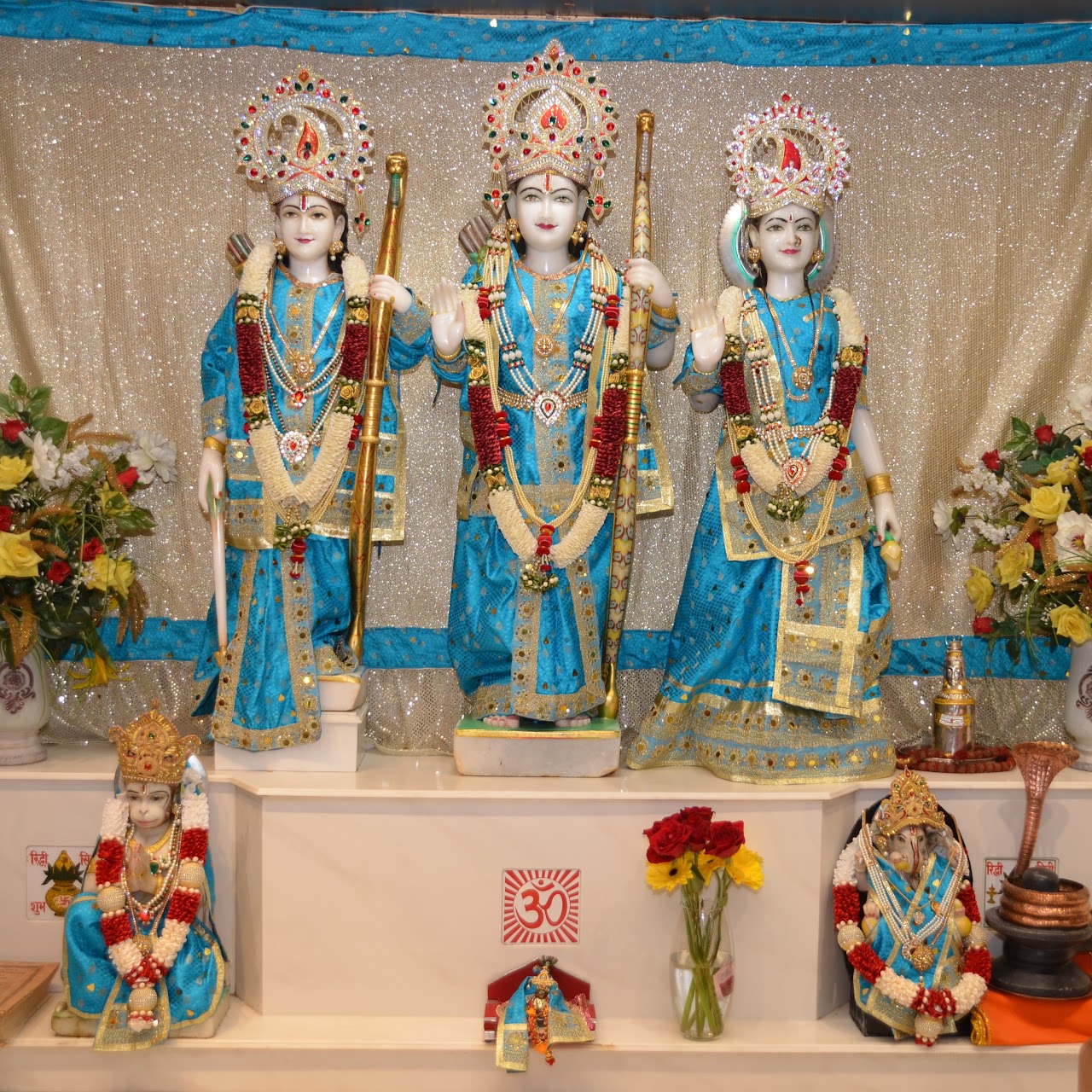
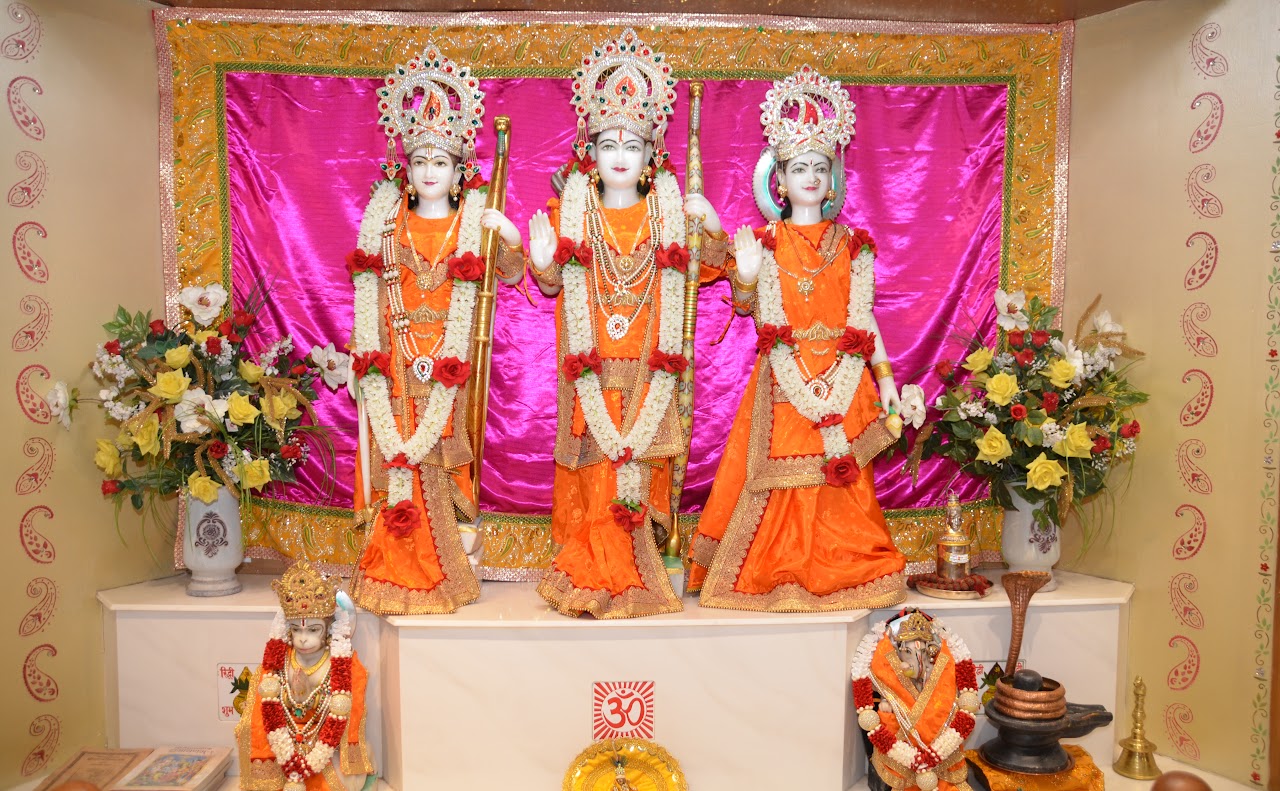
Every Hindu temple, or mandir, has a central deity. The central deity of HARI is Lord Rama, or Lord Ram, as his name is pronounced in many parts of India. Lord Rama is an avatar, or incarnation, of Lord Vishnu, the Preserver of Dharma. (Dharma is the cosmic order, including the laws of nature, as well as the laws of society: all our duties and moral obligations.) His life story is presented in the Ramayana, one of the sacred scriptures of Hinduism. His wife, Sitadevi, stands to his left (or to the right, from the point of view of one who is facing his image). Sitadevi is also a divine incarnation: of Goddess Lakshmi, the wife of Lord Vishnu. To the right of Lord Rama (the viewer's left) is Lakshmana, his brother.
The central altar at HARI also includes smaller images of other important deities, such as Lord Hanuman, who takes the form of an ape. He is a great helper to Rama in the story of the Ramayana. There is also Lord Ganesha, or Lord Ganesh, who is depicted with the head of an elephant. He is the remover of obstacles. His elephant head represents divine wisdom and strength. The central altar also has a small image of the baby Lord Krishna, as well as a Shiva Linga (the abstract form of Lord Shiva), which is guarded by Nandi, the bull, who serves as Lord Shiva's vehicle (or vahana), and the symbol Om, which is an especially sacred mantra, or prayer, that symbolizes the infinite Brahman.
Shakti
Goddess Durgamata
Another very popular Hindu deity is Lord Krishna, depicted at HARI with Radha, who is his beloved devotee. The love story of Radha and Lord Krishna is famous, and is found in such classic works of Hindu literature as the Bhagavata Purana and the Gita Govinda, a beautiful poem by the twelfth-century Bengali Hindu poet, Jayadeva. Lord Krishna is also the teacher of the hero Arjuna in the Bhagavad Gita, one of the best known and most beloved of Hindu scriptures.
The love of Radha and Lord Krishna represents the love of the individual soul, or jiva, for its Supreme Lord, Krishna. Some Hindu traditions teach that Lord Krishna is, like Lord Rama, an incarnation of Lord Vishnu, while others teach that Lord Krishna himself is the original Supreme Being. Lord Krishna is usually shown playing a flute, whose enchanting music represents the call of the Divine Reality that is drawing all beings ever nearer.
Wisdom
Goddess Saraswati
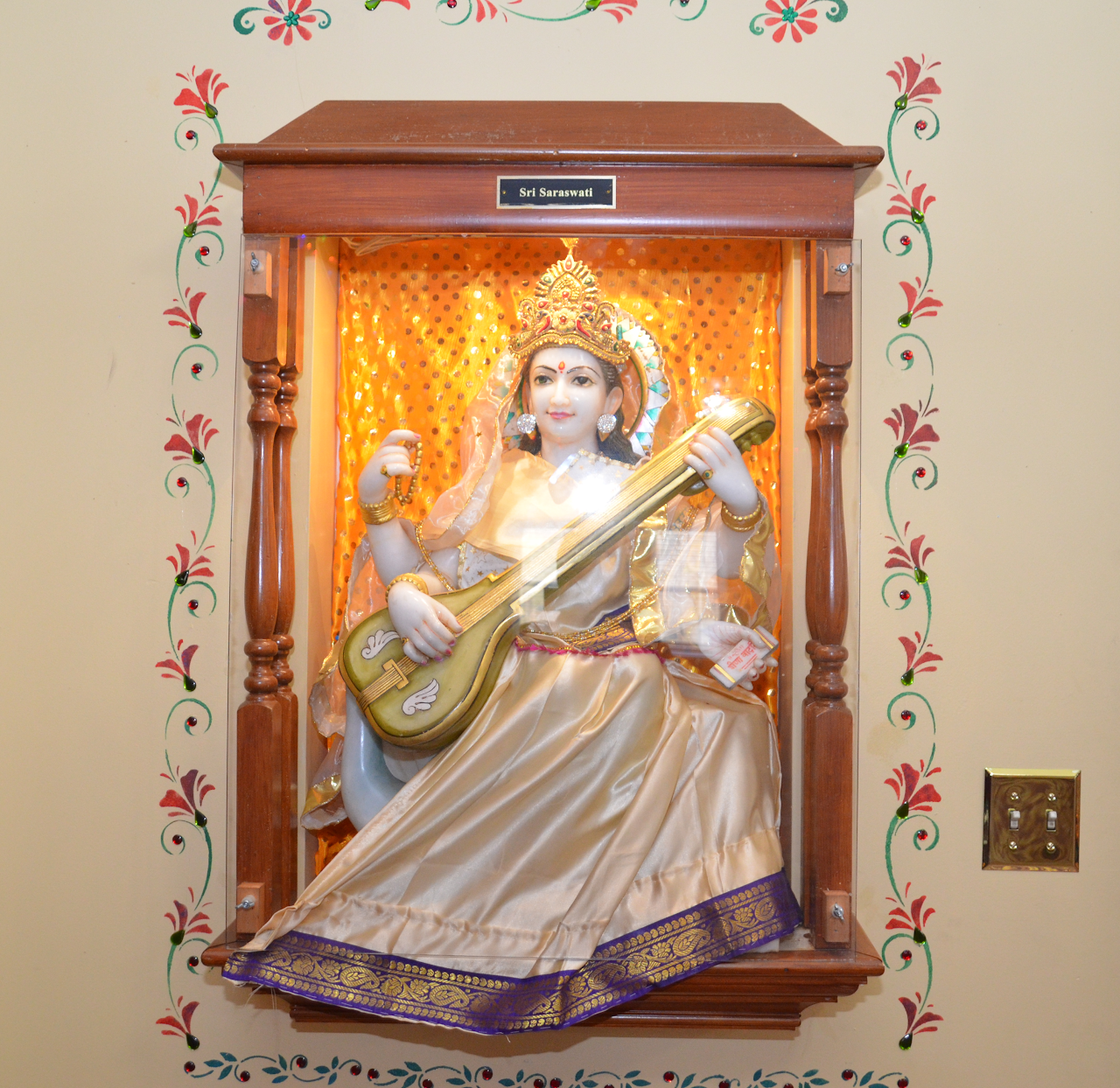
The Goddess Saraswati is the embodiment of wisdom in all its forms. These forms are represented in her physical appearance. She has two pairs of arms and hands. In one pair of hands, she holds a musical instrument called a veena. This represents the creative arts. In another hand she holds a book of the traditional Indian palm-leaf style. This represents academic knowledge-"book learning."
Finally, in another hand, she holds a mala, or a string of prayer beads, representing spiritual wisdom. So: creative, artistic knowledge, which is often associated with the right side of the brain, rational, intellectual knowledge, associated with the left side of the brain (and she holds the book, interestingly, in one of her left hands), and the integral knowledge of spirituality are all represented by Goddess Saraswati.
Jain Tradition
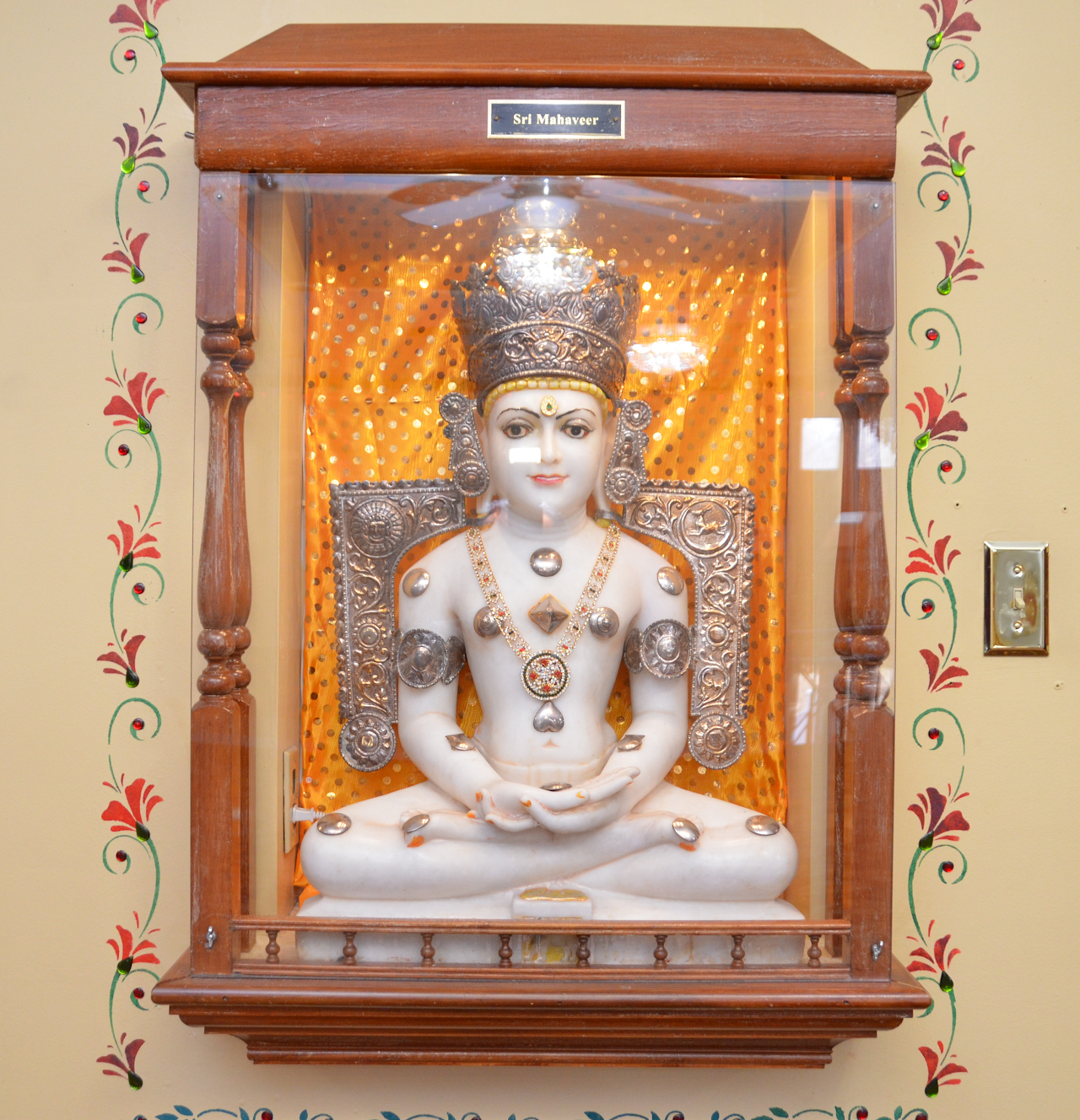
Lord Mahaveer
The spiritual traditions of India have co-existed with remarkable harmony for millennia, sharing many of the same basic beliefs and values. One tradition that co-exists with the Hindu tradition and that shares the same values of nonviolence and the inherent divinity of all beings, and the same belief in karma, rebirth, and liberation, is the Jain tradition.
According to the Jain tradition, twenty-four enlightened beings known as Tirthankars are born on the Earth in the course of a cosmic cycle-an enormous span of time. The twenty-fourth Tirthankar of our cosmic cycle has already appeared, and is Lord Mahaveer. Lord Mahaveer lived around the same time as Lord Buddha, roughly the fifth or sixth century before the Common Era. He is represented at HARI temple with a murti, or image, in accord with the Murtipujak Shvetambar tradition of Jainism. The Jain community of the greater Harrisburg area celebrates its holy days at HARI just as Hindus do, and all are welcome to participate.
Yogeshvara
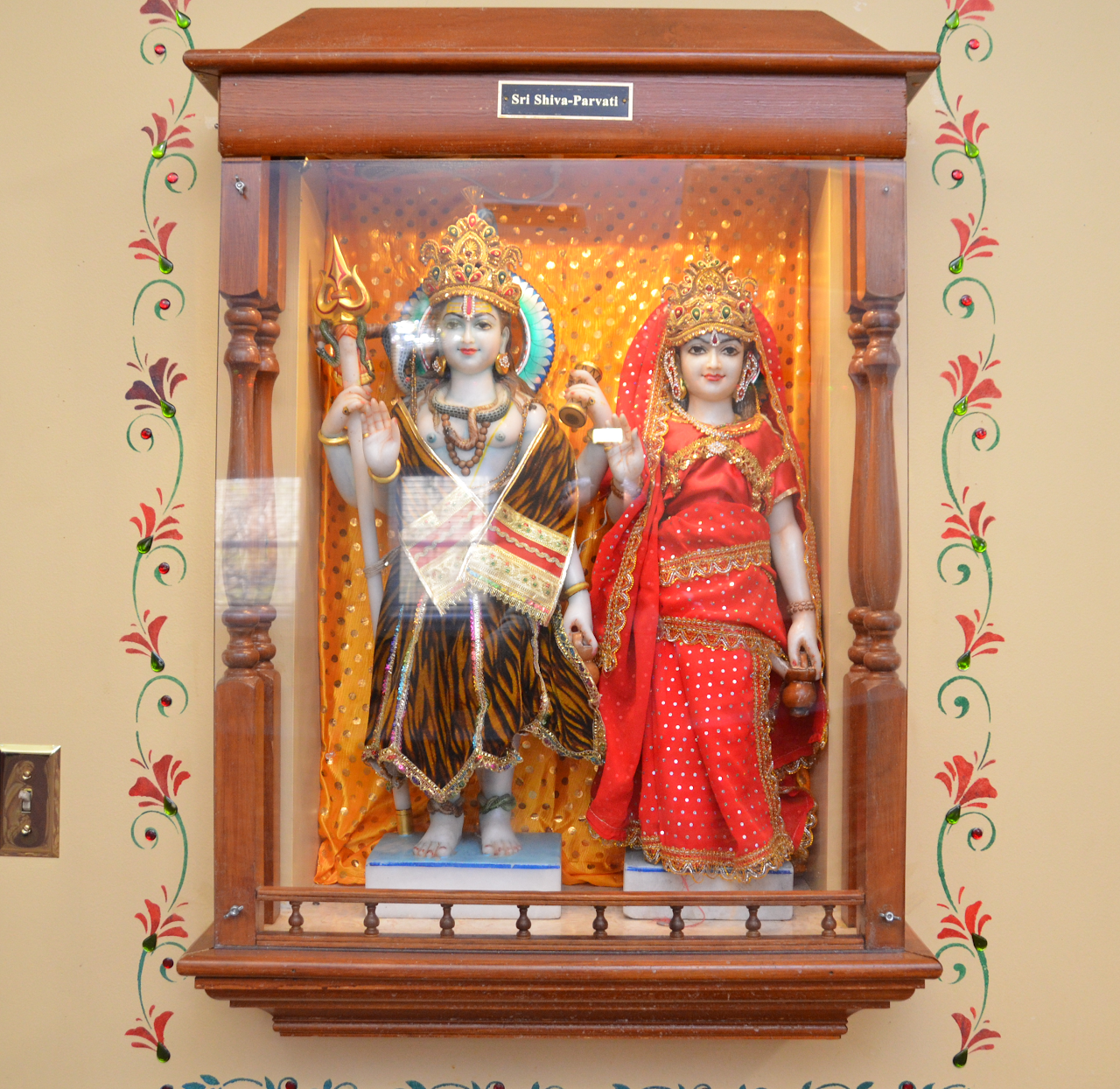
Lord Shiva – Parvathi
Lord Shiva is one of the most revered deities in the Hindu tradition and is accompanied by his wife, Goddess Parvati, the Mother of all Creation. He is known as a powerful and mysterious deity who dwells on Mount Kailash in the Himalayas. The sacred Ganga is believed to flow from his matted hair, while his trident represents the destruction of greed, hatred, and delusion. Shiva is also known as Yogeshvara, the Lord of Yoga, and Hara, the Remover of worldly attachments and transformation.
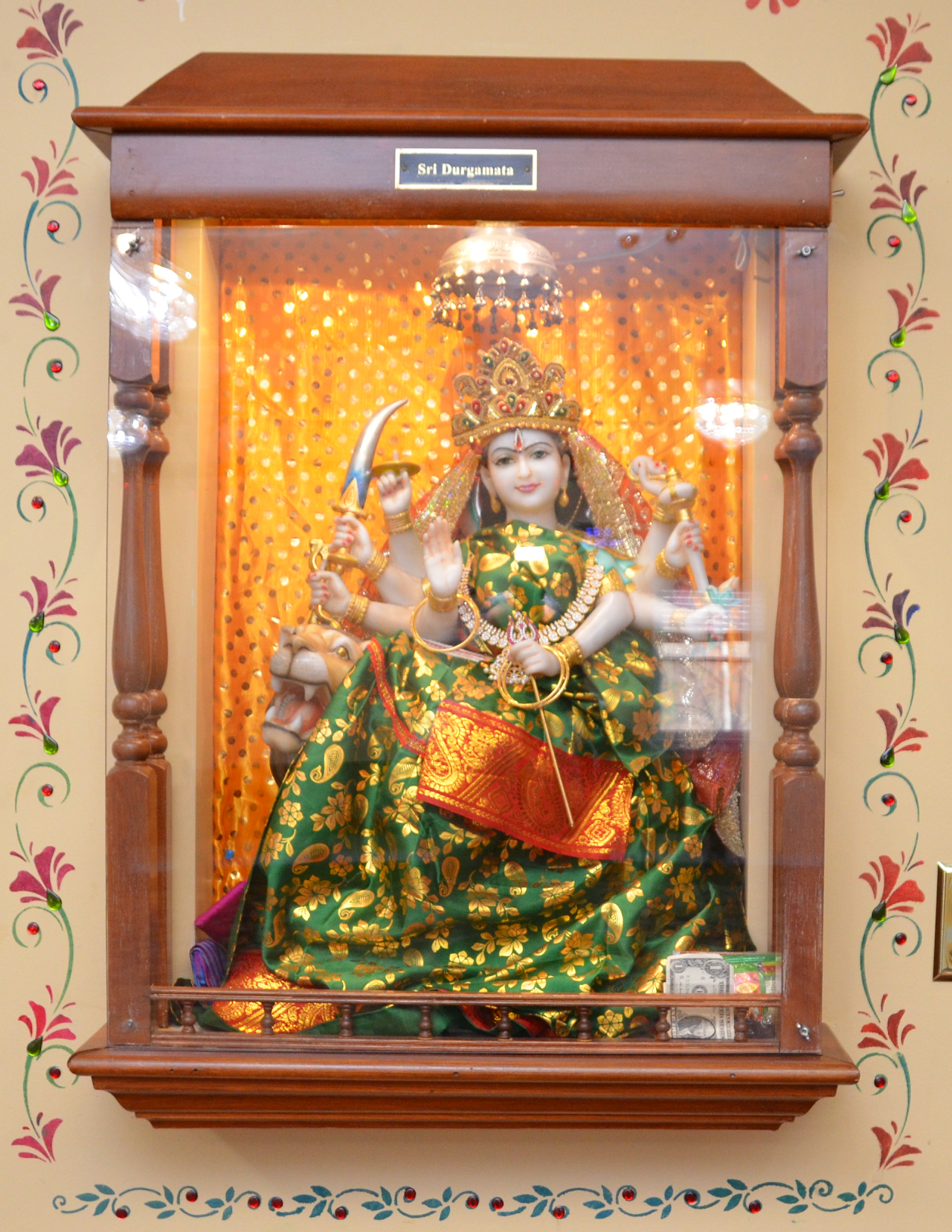
Goddess Parvati represents Shakti, the cosmic energy and creative power of the universe. Together, Shiva and Shakti represent the divine balance of consciousness and energy, with Parvati also known as Mahadevi, Durgamata, and Kali.
Divine Love
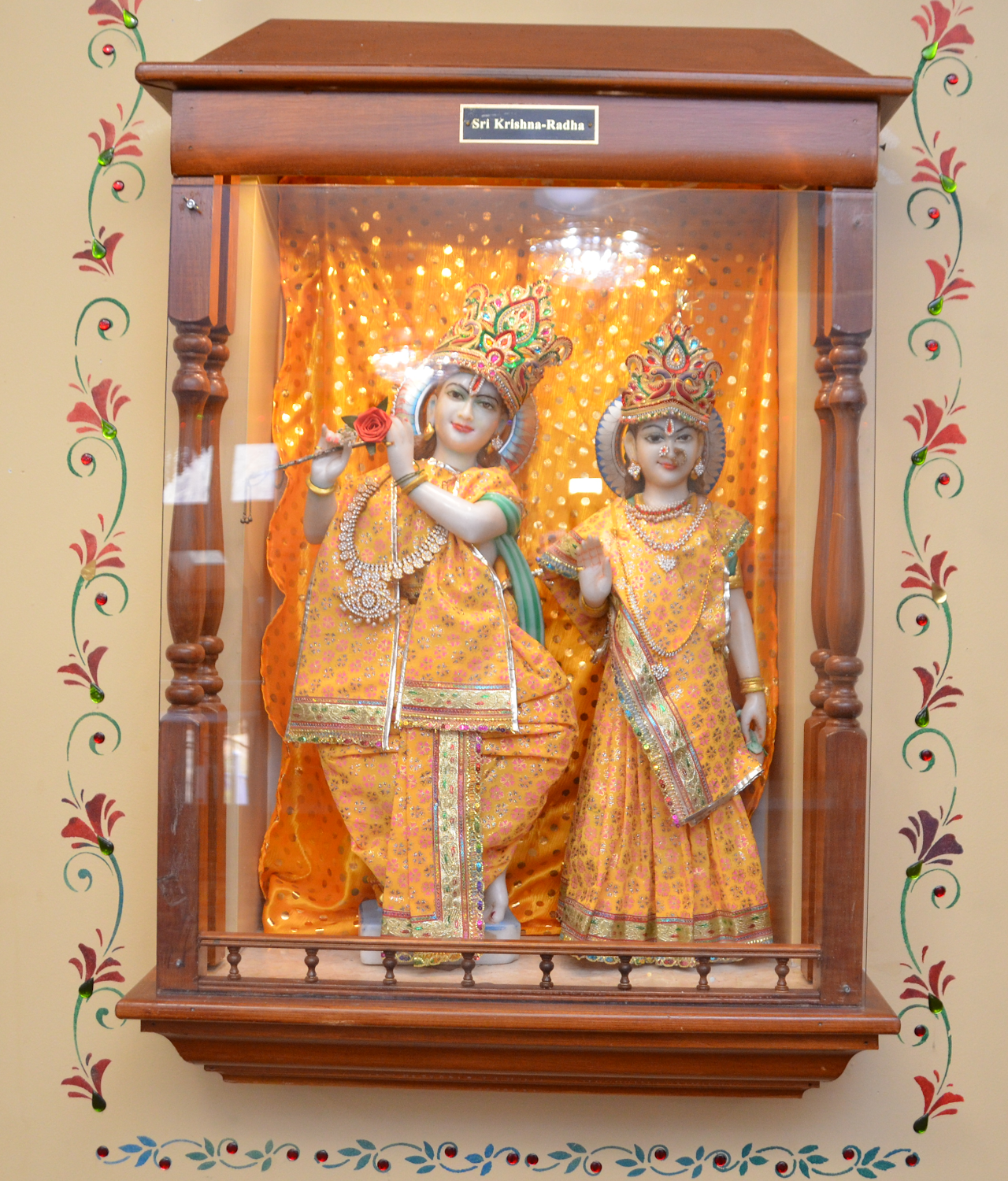
Lord Radha–Krishna
Another very popular Hindu deity is Lord Krishna, depicted at HARI with Radha, who is his beloved devotee. The love story of Radha and Lord Krishna is famous, and is found in such classic works of Hindu literature as the Bhagavata Purana and the Gita Govinda, a beautiful poem by the twelfth-century Bengali Hindu poet, Jayadeva. Lord Krishna is also the teacher of the hero Arjuna in the Bhagavad Gita, one of the best known and most beloved of Hindu scriptures.
The love of Radha and Lord Krishna represents the love of the individual soul, or jiva, for its Supreme Lord, Krishna. Some Hindu traditions teach that Lord Krishna is, like Lord Rama, an incarnation of Lord Vishnu, while others teach that Lord Krishna himself is the original Supreme Being. Lord Krishna is usually shown playing a flute, whose enchanting music represents the call of the Divine Reality that is drawing all beings ever nearer.
Balaji
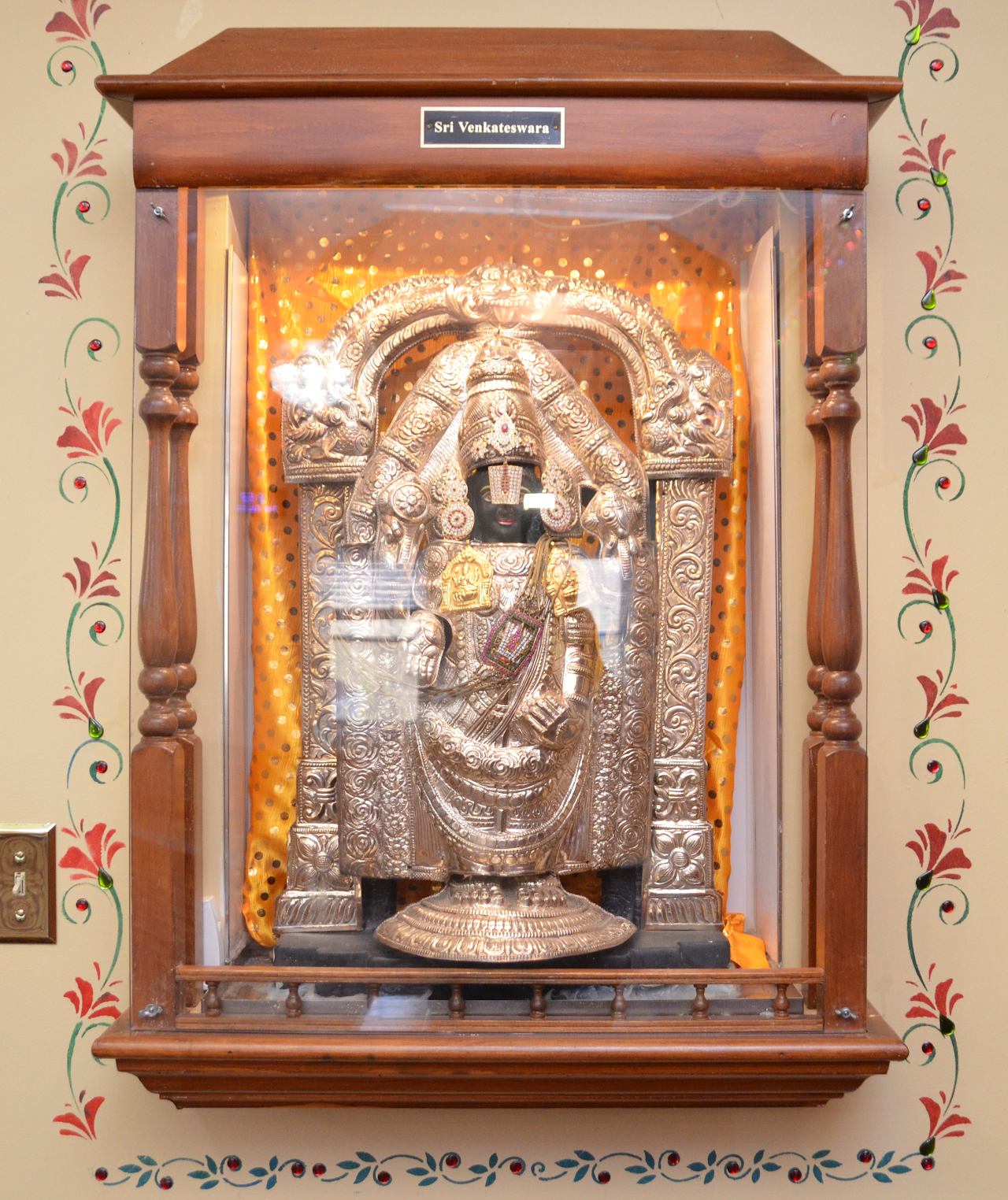
Lord Venkateswara Swami
Lord Venkateswara Swami is a form of Lord Vishnu. His main shrine is in Tirupathi, in southern India, where he is especially popular. He is also known as Balaji, "the powerful one," and his gaze is said to be so powerful that the eyes of the original image are kept covered.
Spiritual Guides
Priests
Temple Priests
Guiding Our Community in Faith
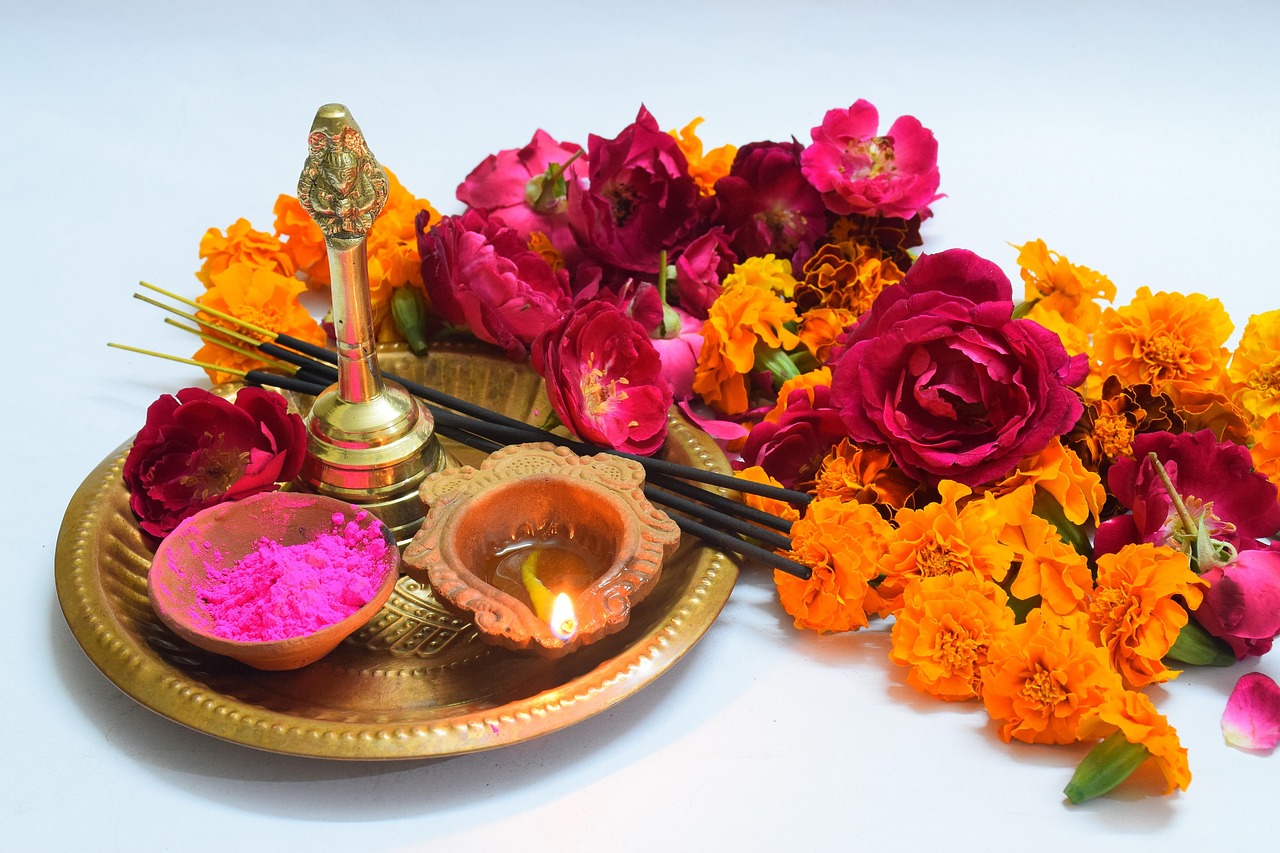
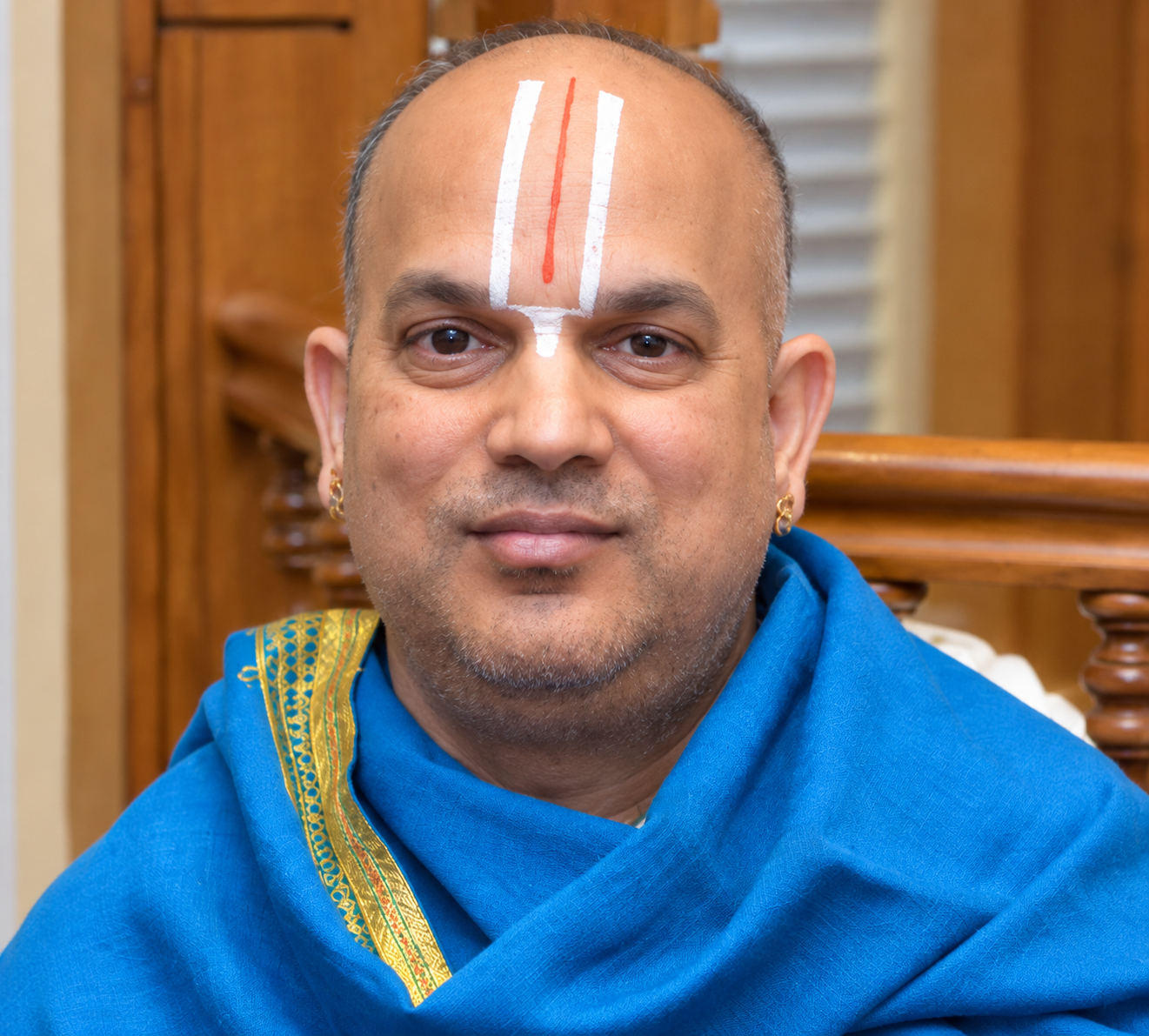
Our learned priests provide spiritual guidance, perform traditional rituals, and lead our community in prayer — from daily aarti and puja to weddings, havans, and other sacred ceremonies.
Leadership
Office Bearers

Governance
Serving HARI's Community
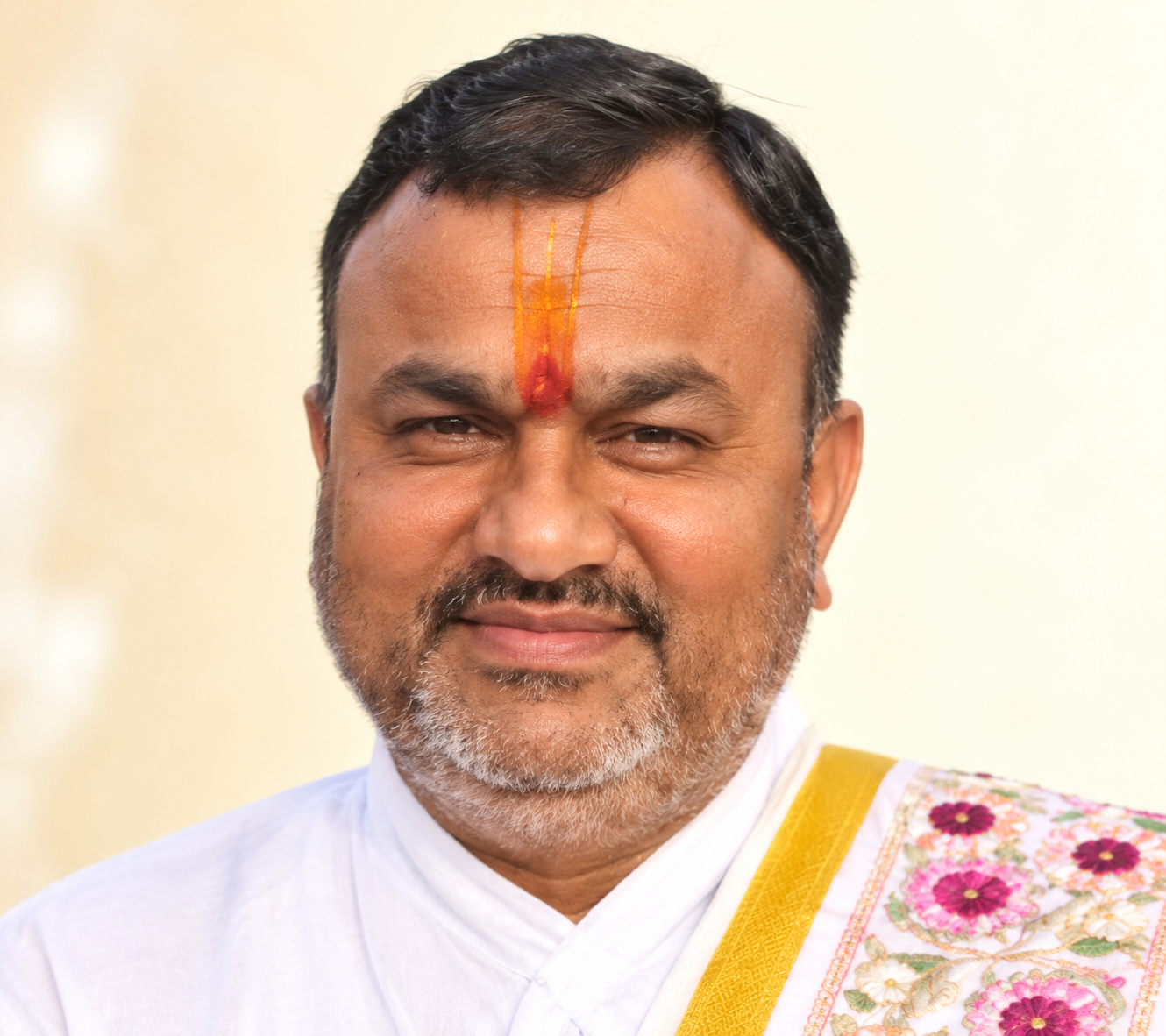
HARI is guided by a dedicated Board of Trustees and Executive Committee who oversee the temple's affairs, finances, and day-to-day operations, alongside the HARI School leadership who shape our educational and youth programs.
Browse the current rosters below for each body.
By-Laws
Governance & Legal Framework
Since 1971
Built on a Founding Promise
HARI's by-laws and founding documents trace back to a letter of intent filed in 1971, formalized through incorporation, temple construction, and decades of growth — the same legal framework that still guides our Board of Trustees and Executive Committee today.
Historical Overview
The Hindu American Religious Institute (HARI) has a long and well-documented history of establishment, growth, and expansion.
SEPTEMBER 10, 1971 – A letter of intent to incorporate Hindu American Religious Institute (HARI) as a non-profit organization was filed with the Department of State of the Commonwealth of Pennsylvania on by a group of dedicated devotees.
DECEMBER 8, 1975 – The certificate of incorporation was issued
MARCH 26, 1977 – The Board of Trustees and the Executive Committee were formalized in 1977 and HARI temple was inaugurated in West Fairview Township.
DECEMBER 1982 – Purchase of 6.75 acres of land was made in Fairview Township and ground breaking for the new temple took place in October 1985. Pran Pratistha of the deities brought from the old temple was performed during the grand opening of the temple held from July 4 to July 6, 1986 which coincided with the 11th Anniversary celebration of HARI.
OCTOBER 12, 1986 – On Vijaya Dashami day, Pran Pratistha of the new deities of Rama, Sita and Hanuman was performed (Pran Pratistha of Lakshman followed later).
NOVEMBER 4, 1996 – Temple expansion project was started.
JUNE 12, 1999 – Celebration of the expansion of the temple was held.
Year 2000 – The year 2000 has been the 25th year of HARI's existence and celebration of the Silver Anniversary of the temple has been held throughout the year 2000.
Official Documents
Articles of Incorporation (1971)
Foundational legal document of HARI.
Certificate of Incorporation (1975)
Official registration document.
IRS 501(c)(3) Status
Tax-exempt certification document.
HARI By-Laws
Complete governance structure and operational rules.
Past Officers List
Historical record of leadership at HARI.
Why By-Laws Matter
The by-laws define the governance, structure, and operational procedures of HARI. They ensure transparency, accountability, and consistency in decision-making.
These documents guide the Board of Trustees, Executive Committee, and members in maintaining the integrity and mission of the organization.
Policies and Practices
HARI Governance Guidelines
Day-to-Day Operation
How HARI Runs Itself
This document guides the Board of Trustees and Executive Committee in the daily operation of HARI — from board meetings and finances to festivals, rentals, and guest programs. In case of any conflict, the HARI By-Laws shall prevail.
This document is intended to guide Board of Trustees and the Executive committee in daily operation of H.A.R.I. These policies were formulated by Board of Trustee.
IN CASE OF ANY CONFLICT AND OR DISPUTE, H.A.R.I. BYLAWS SHALL PREVAIL.
BOARD OF TRUSTEES
The Board of Trustees is empowered by the H.A.R.I. BYLAWS to manage the affairs, business, and property of this corporation. The Board shall meet at least once a month. The meeting schedule shall be established ahead of time. Meetings shall be open to H.A.R.I. members and shall be conducted by the Chairman in a businesslike manner. All meetings shall start with a prayer.
Each Board meeting shall follow a predetermined agenda, including reports from each committee, discussion of issues and concerns, and adjournment.
The Chairman shall take minutes of each Board meeting, and the highlights shall be published in H.A.R.I. Times. The Chairman shall also keep records of all Board meetings and activities.
The outgoing Chairman shall hand over all H.A.R.I. records to the incoming Chairman as soon as a new Chairman is elected.
The Chairman shall assign each Trustee certain tasks and responsibilities for the smooth operation of H.A.R.I.
The Chairman, with the consent of the other Trustees, shall appoint committees to perform various tasks, including the Finance Committee, Public Relations Committee, Security and Legal Committee, Building Maintenance and Planning Committee, Land and Lot Maintenance Committee, and other committees as appropriate.
COMMITTEES
Each committee shall have at least 4 members including one (at least) trustee who shall chair that committee
Board chairman shall be ex-officio member
Each committee in the beginning of a year shall develop work plan for the entire year, obtain Board's approval and Implement the work plan
These committees shall have powers and responsibilities as assigned to them by the Board of Trustees
FINANCING AND RECORD KEEPING
Approximately $100,000 (amended from $35,000 on 11-13-1999) shall be kept in reserve fund at all times. The funds shall be invested in high interest bearing account that will be maintained by the Treasurer. Money from this account can ONLY be withdrawn with the approval of the Board of Trustees. Chairman of the Finance Committee shall be responsible to obtain such approval and implement it through the Treasurer
The Treasurer shall be responsible to maintain all H.A.R.I. accounts (general expense, school, construction etc.)
The Treasurer shall NOT pay any single expense, EXCEEDING $500 except utilities and routine bills, without the approval of the Board of Trustees. It is the responsibility of the President to obtain such approval
Important documents such as deeds, bank certificates, H.A.R.I.'s constitution, and insurance policy etc., must be kept in a bank deposit box. Only the President, Board Chairman, the Treasurer, and the Finance Chairman shall have access to the deposit box
All government returns and receipts for the past seven years shall be kept in the Temple safe box. All other documents and papers shall be kept in the Temple office file cabinets, which shall be maintained by the President and the Treasurer
EXECUTIVE COMMITTEE
The Executive Committee is empowered by H.A.R.I. BYLAWS to have overall supervision and active management of this corporation's day-to-day business. The Executive Committee shall meet regularly at least once a month and be responsible for the following:
CELEBRATIONS AND FESTIVALS
In the beginning of each calendar year the Executive Committee shall develop a schedule of events for the entire year, and shall celebrate at least the following festivals each year.
Makera Sankranti, Maha Shivaratri, Holi, Gudi Padva, Rama Navmi, Temple Anniversary, Krishna Janamasthmi, Ganesh Chaturthi, Vijaya Dashami, Diwali
MANAGE THE FOLLOWING ACTIVITIES
1. Periodically prepare and mail newsletters to all H.A.R.I. devotees.
2. Mail notice/s of general body meeting/s to all members.
3. Implement an aggressive "membership drive."
4. Arrange to have the Temple opened at least on Saturday and Sunday evenings.
5. Keep sufficient quantity of all the supplies needed for Temple activities.
6. Pay Temple bills as and when due, keep accurate records of financial transactions, and file government returns.
7. Publish financial status every quarter in H.A.R.I. Times.
8. Arrange to have the Temple facility cleaned and dispose of trash. The school committee shall be responsible for trash removal on school days.
9. Arrange for lawn maintenance and snow removal as needed.
10. Maintain an up-to-date inventory of temple articles.
11. Any event/program arranged by devotee/s and not sponsored by H.A.R.I. Executive Committee/Board of Trustees shall be considered a private program of devotees. Facility rental rules and policies shall apply for all private program/s.
H.A.R.I. SCHOOL
The school is part of the Executive Committee. The school shall be operated by the directors and school committee. The President shall assign one of its members solely for school operations. Such person shall work directly with the school director/s. The President shall be ex-officio member of all school related committees.
The school committee shall formulate the curriculum and activity policy consistent with H.A.R.I. ByLaws. Any devotee who wants to provide religious and cultural training to H.A.R.I. Devotees/children and wants to collect reasonable fee may do so AFTER obtaining approval from the Executive Committee with the understanding that:
The training is related to Hindu religion/culture The fee will be charged directly to the devotees Twenty percent (20%) of the fees so collected shall be contributed to H.A.R.I. for cleaning, up keeping, and sharing utilities
The Board of Trustees, however, can waive this where overall benefits outweigh the monetary benefit.
DONATION OF ITEMS
The Executive along with the appropriate trustee's committee shall develop a list of items needed for the Temple and publish the list in H.A.R.I. Times
Any devotee who wants to donate specific item/s of their wish (not on the list) may do so ONLY with the prior approval of Executive Committee/Board of Trustees
OTHER
Overnight stay in the temple/facility for any individual or group shall ONLY be permitted by the President and the Chairman of the Board of Trustees.
Personal affairs of any H.A.R.I. devotee other than marriage, birth, death, or serious illness in the family shall not be printed in H.A.R.I. Times
Public relations committee shall promptly mail cards to families in case of birth, marriage, and serious illness.
In case of the death of a nearest relative in U.S., the P.R. committee shall send flowers (approximate value $35) to the devotee/s family.
The PR committee shall keep printed cards and establish procedures to provide help in funeral services.
THE BOARD OF TRUSTEES IN COMMUNITY INTEREST, BUT AFTER FACT FINDING AND CONSULTING WITH THE EXECUTIVE COMMITTEE, MAY REVERSE CERTAIN DECISIONS TAKEN BY THE EXECUTIVE COMMITTEE
ARRANGE RENTAL OF TEMPLE FACILITY
Temple Facilities are available to H.A.R.I. Devotees for rent except during H.A.R.I. programs and Sunday School Days.
Sunday school activities may be postponed at the discretion of the school director when a special occasion such as marriage or other sacred occasion of a devotee falls on that day.
These exceptions will only be made provided the devotee is a paid member or pays equivalent donation to H.A.R.I. and gives one month advance notice
Temple shall be rented strictly on first come first served basis
Alcoholic beverages and non vegetarian food will NOT be permitted
Rental shall be charged at $100.00 per day for paid members and $150.00 for non paid members
An Initial deposit of $75.00 shall be required
No portable gas stove allowed inside
Temple supplies not included
Equipment must not be taken outside
Religious usage without food = no rent
Non-profit groups may rent with donation
Aarti donations must go to HARI
Prayer hall always open
Cancellation requires 2 weeks notice
GUEST SPEAKERS AND ARTISTS
During religious programs only religious activities shall be performed
In cultural programs non-religious songs of good taste permitted
Artists informed beforehand
Spending limit $300
Above $500 requires Board approval
All payments via HARI
No on-the-spot collections
Extra donations outside HARI allowed
Programs must be approved and managed by HARI
Amendments
Policies & Addendums
Board-Approved Updates
Refining Our Policies Over Time
As HARI has grown, the Board of Trustees has periodically passed addendums to the Policies and Practices document — covering priest services, elections, school administration, facility rentals, and program guidelines. The full history is below.
This document is intended to guide Board of Trustees and the Executive committee in daily operation of H.A.R.I. These policies were formulated by Board of Trustee.
IN CASE OF ANY CONFLICT AND OR DISPUTE, H.A.R.I. BYLAWS SHALL PREVAIL.
AMENDED 11-05-1994
The Board of Trustees has passed the following addendum to Policies and Practices:
Any article, material, advertisement or language which can create discrimination and/or controversy among H.A.R.I. Devotees shall not be printed in H.A.R.I. publication
H.A.R.I. priest compensation and duties will be based on compensation paid and duties performed by the priests of surrounding temples of similar size
Temple priest is available for services in the temple whenever the priest is present at no charge to H.A.R.I. Devotees
Temple priest services are available outside H.A.R.I. Premises based on: a. Priest availability b. First come first served basis subject prior approval of H.A.R.I. President and providing transportation to the priest
Suggested donations payable to H.A.R.I. For priest services outside H.A.R.I. Premises are: a. Katha, Puja, Havan, Religious Ceremony, Naam karan, Baby Shower, etc. Members $21.00 Others $51.00 b. Wedding/Engagements Members $101.00 Others $151.00 c. Funeral Services No charge
AMENDED 09-08-2002
The Board of Trustees has passed the following addendum to Policies and Practices:
Guidelines for the Board in forming the Nominating Committee and subsequent steps to follow through completion of the election process
Introduction:
Article IV, Section 10 of HARI Bylaws covers the Nomination of Officers of the Executive Committee and Article V, Section 3 of HARI Bylaws addresses the Nomination of Trustees.
The above two Articles call for the appointment of a Nominating Committee by the Board of Trustees. Time frame for its formation, number of committee members, composition of the Nominating Committee and guidelines to be followed by the Nominating Committee are spelled out in the Bylaws.
For the nomination of officers of the Executive Committee, Article IV, Section 10 states that forty-five (45) days before the annual membership meeting, the Board of Trustees shall appoint a nominating committee consisting of five members which shall select a slate of officers/trustees to be presented to the members at the annual membership meeting. The nominating committee shall consist of a trustee, the President, and three members from general body. Nominating committee shall not nominate its own member/members. Additional written nominations may be submitted by members provided at least ten members sign such request for nomination and the request is received by the Secretary/Treasurer prior to the Officer's election meeting.
For the nomination of Trustees, Article V, Section 3 states that at least forty-five (45) days before the annual membership meeting, H.A.R.I. Board of Trustees shall appoint a nominating committee consisting of five members which shall select a slate of trustees to be presented to the members at the annual membership meeting. Persons so nominated should have actively participated in H.A.R.I. activities. Due consideration should be given to represent surrounding communities.
The following guidelines were approved by the Board of Trustees at the September 8, 2002 Board meeting for the use of the Trustees and the Nominating Committee and will be included as an Appendix to the HARI Policies and Practices document after the amendments to the HARI Bylaws are approved by the general body on November 9, 2002.
AMENDED 09-08-2002 (Continued)
Guidelines for the formation of the Nominating Committee (for use of the Board of Trustees) and subsequent steps to follow until completion of the election process
The following procedure outlines the steps that the Board of Trustees shall follow in the formation of the Nominating Committee and thereafter until the completion of the election process:
The chairman of the Board shall include an item Formation of the Nominating Committee on the Agenda of the Board meeting of the appropriate month, to allow at least 45 days lead-time before the election day, to complete the process of nomination of candidates for the next year's Executive Committee and the Board of Trustees
The Chairman of the Board shall nominate the President of last year's Executive Committee (who is one of the members of the Board) to chair the Nominating Committee. If he/she is unwilling or unavailable to serve as the chairperson, one of the senior members of the Board (preferably a third year trustee) shall be nominated to serve as the chairperson
Current President of the Executive Committee shall be the second person appointed to serve on the Nominating Committee
Three additional members representing a cross-section of the community shall be nominated by the Board of Trustees using the criteria that the nominees are longstanding members of H.A.R.I. (at least five years standing membership or life membership of H.A.R.I. desired) with sufficient familiarity with the membership of H.A.R.I. Nominees shall be approved by a simple majority vote of the trustees present
The Chairman of the Board shall provide members of the Nominating Committee with lists of the current years members (as of September 15th of the year) and the list of life members along with the guidelines that the Nominating Committee should follow
Prior to their appointment, members of the Nominating Committee approved to serve shall commit to attend majority of the meetings of the nominating committee. The members selected from the general body must not have served on the Nominating Committee for at least three (3) years prior to their appointment
If for any reason, the chairperson of the nominating committee becomes unavailable or unwilling to continue as the chairperson, the Chairman of the Board shall replace him/her by another trustee
The names of the Nominating Committee members and their telephone numbers shall be published in the immediate next issue of HARI TIMES along with a notification that devotees can submit names of nominees (with at least ten signatories supporting such nominations) for the Executive Committee and Trustee positions out of the membership lists of H.A.R.I. to the Secretary until fifteen (15) days prior to the election day.
Upon receiving notification from the Nominating Committee chairman that the slate of candidates has been finalized (which should happen at least three days prior to the election day), the Chairman of the Board convenes a joint meeting of the Board of Trustees and the Nominating Committee at least one day prior to the election day.
At this meeting, the Board reviews the list of candidates for conformity with the requirements of the Bylaws and certifies the slate of candidates by endorsing them for presentation to the general membership on the election day.
After the election of the Executive Committee and the Trustees either by a voice vote or by a show of hands at the general membership meeting, the names of the elected members shall be published in the subsequent month's HARI TIMES.
Within one month following the general membership meeting, the Chairman of the Board shall hold a meeting of the Board of Trustees to elect by a majority vote a new chairman of the Board for the following year.
Guidelines for the Nominating Committee
Guidelines for the Nominating Committee in finding a slate of Candidates for the Executive Committee and the Board of Trustees.
After the formation of the Nominating Committee by the Board of Trustees at least 45 days before the election day, the Chairman of the Board shall provide a list of annual and life members and these guidelines to the members of the Nominating Committee.
For the Executive Committee: The following guidelines shall be used by the Nominating Committee members in selecting nominees for the positions of Senior Vice-President, Secretary, Treasurer, and five vice-presidents. The Nominating Committee shall not nominate its own members to any of the positions in the Executive Committee.
The Senior Vice-President of the current year who shall become the President of the Executive Committee during the following year may be allowed to recommend candidates of his choice for Treasurer, Secretary and up to three (3) vice-presidents in order to ensure smooth day-to-day operations of HARI.
Representation of the surrounding communities (York, Lancaster etc.) should be given due consideration in selecting the candidates for vice-presidents.
For the Board of Trustees: Members of the Nominating Committee shall not nominate its own members to the Board of Trustees. Candidates who have just served a full term on the Board of Trustees shall not be eligible for reappointment for at least three years. Only persons who have volunteered services to HARI and who have taken an active role in the activities of HARI shall be eligible to serve as Trustees. Persons who do not have a track record of community service or who are on business or visitor visa do not qualify to serve as Trustees.
It is important to ensure that there is adequate representation of all sections of the Hindu community on HARI Board. The Nominating Committee shall strive to achieve a regional and gender balance as appropriate, on the Board of Trustees. Two alternates shall also be included in the slate of candidates.
The Nominating Committee shall complete the task at least three (3) days before the election day and shall promptly notify the Chairman of the Board of Trustees of the completion of their task. The Nominating Committee shall attend a joint meeting of the Board of Trustees and itself at least one day prior to the election day so that the Board can pre-certify the slate of candidates for presentation to the general membership.
AMENDED 11-06-2002
The Board of Trustees has passed the following addendum to Policies and Practices:
Guidelines for Administering HARI School and Procedures for Appointing School officials:
The following procedures will govern the election/selection of the HARI school officials beginning January 1, 2003.
A. HARI School Committee — The school committee will consist of the President of the Executive Committee, school co-directors (the Director and the Youth Forum Director), teachers, treasurer and one appointed trustee.
B. School Staff — The school staff will consist of the Director, the Youth Forum Director, the lunch coordinator, teachers and coordinators of other educational programs.
C. Terms of Office — The terms of office of the Director and the Youth Forum Director will be three years. The term of office of the school teachers and the lunch coordinator will be one school year.
D. HARI school year — School year will run from September of the year until August (or June, for school programs) of the following year, with summer recess for the rest of the year.
E. Remuneration — Except for reimbursement of actual expenses, no remuneration will be paid to volunteering school officials. Professional teachers may be exempt from this policy.
F. Other Programs — Besides religion, language, music and fine arts classes, other programs such as Stress Free Life and Universal Healing can be conducted under the umbrella of HARI school.
G. Accounting — School co-directors will submit an income/expense statement quarterly to the President/Treasurer.
H. Tuition fee for special classes — Professional non-volunteer teachers may collect fee with approval. 20% goes to HARI.
I. Registration — First time registration: $30 | Renewal: $20 | Late fee: $10
J. Reporting and approval Requirements — All expenses must be pre-approved by School Director.
K. Procedures for appointment — Committee meetings, candidate selection, approvals, announcements handled formally.
L. Duties of School Director — Run school, manage activities, appoint teachers, handle finances.
M. Duties of Youth Forum Director — Support director, manage youth activities, organize events and programs.
AMENDED 02-06-2003
RENTAL OF TEMPLE FACILITY POLICY
HARI Temple's lower level hall is available for private use. All rentals are from 7:00 AM to 11:00 PM unless approved otherwise Temple shall be rented strictly on first come first served basis Upper hall is never rented Security deposit required Alcohol and non-veg strictly prohibited Facility must be cleaned after use Damage liability lies with renting party Violation leads to restriction of future rentals
AMENDED 01-11-2004
The Board of Trustees has passed the following addendum to Policies and Practices:
Extended Services
HARI shall provide the following extended services to its Devotees:
HARI Temple offers the following services to devotees:
Temple Hours:
Everyday 7:30 am to 12:30 pm, and 5:00 pm to 8:30 pm
HARI Temple Services: (no charge to devotees)
Daily Aarti: 8:00 am, 12:00 noon, and 7:00 pm
Daily morning puja: 9:00 am (Shubha Prabhatham)
Vishnu Sahasranama: Every Saturday 12:30 pm
Extended Services to devotees at HARI Temple:
Archana (in person or by mail) $10.00
Vahan (Car) Puja (in person) $21.00
Satyanarayana Puja:
Every Purnima at 7:30 pm $21.00 (sponsored by devotees)
Any day at 11:00 am $21.00 (pre-schedule with the Priest)
Other Ceremonies(Annaprashan, Aksharabhayanam, Namakaran, etc.)
Pre-schedule with Priest $51.00
Wedding / Engagements (does not include facility rental):
Members $151.00
Non-members $201.00
Note:
1) Timings are subject to change during festivals and special occasions.
2) Extended Services are provided only if they do not conflict with HARI scheduled programs.
Extended Services to Devotees at their Homes, beyond Temple Hours only:
Any Puja or Ceremony (Gruhpravesh, Groundbreaking, etc.):
Members: $101.00 Others: $151.00
Wedding / Engagements:
Members: $151.00 Others: $201.00
Funeral Services:
Members: $0.00 Others: $51.00
Note:
1) Devotees need to pre-schedule this with HARI President and the Priest.
2) Extended Services outside of the temple premises are provided only if they do not conflict with HARI scheduled programs.
3) All Extended Services are first come, first served basis.
Board of Trustees Meeting
BOT Minutes
Transparency
Minutes from Board Meeting
Minutes from HARI's Board of Trustees meetings are published here for our members and devotees, in keeping with our commitment to transparent governance.
Commitment & Values
Our Pledge
A Promise We Uphold
Non-Violence, Acceptance & Inclusion
Violence has no place in our society. We condemn it. Our Hindu values teach us non-violence, acceptance of every religious belief, harmonious coexistence, non-discriminating because of age, gender, race, religious and cultural orientation, total inclusiveness, compassion and adherence to the core principles of decency of humanity.
We remain committed to these principles and pledge to uphold them.
Oct. 30, 2018
Sign the HARI Pledge